
You've either just unboxed a Samsung Galaxy and want to keep it looking new, or you've just paid to fix one and don't want to come back for the same damage again. That's the point where many users grab the first cover that looks decent and hope for the best.
In a repair workshop, that decision matters more than people think. A cover isn't decoration. It's the first barrier between your phone and the concrete at the servo, the tiles in the kitchen, the sand in the car, or the moisture that builds up in a bag after a long Perth summer day. The global mobile phone protective cover market was valued at USD 25.51 billion in 2024 and is projected to grow significantly, according to Grand View Research's mobile phone protective cover market analysis. That lines up with what repair techs see every day. People know covers matter. They just often buy the wrong one.
The hard part is that the samsung galaxy phone covers market is crowded with slim cases, rugged cases, folios, clear shells, magnetic options, wallet styles, and a lot of cheap copies that look fine online but fail in use. If you want something that feels less generic and more design-led, there are also minimalist leather and wool tech cases worth looking at, especially if your priority is everyday carry rather than maximum drop resistance.
Your Guide to Samsung Galaxy Phone Covers
A fresh Galaxy in the hand feels solid. A freshly repaired one feels even better because you've paid to get it back to that condition. Then the usual mistake happens. Someone fits an old loose case, buys the wrong model online, or chooses the cheapest soft TPU cover they can find.
That's how avoidable damage starts.
From a repair perspective, the right cover does three jobs. It cushions impact, keeps pressure off vulnerable edges and corners, and helps the phone survive everyday handling without small wear turning into a bigger fault later. A bad cover does the opposite. It shifts in the hand, traps grit, loosens around the frame, and gives a false sense of protection.
Workshop view: The best cover is the one that still protects properly after months of real use, not the one that only looks good on day one.
There's no single best case for every Galaxy owner. A student carrying an A-series phone in a backpack needs something different from a tradie using an XCover on site, and both need something different from someone who relies on wireless charging and wants a slim S-series setup.
The practical way to choose is simple:
- Match the cover to your actual use. Desk work, site work, gym use, commuting, and beach exposure all punish cases differently.
- Prioritise fit before style. If the fit is wrong, the rest doesn't matter.
- Treat the cover as part of the protection system. The case, screen protector, and your handling habits all work together.
That's how you avoid paying twice for the same phone.
Decoding Cover Types and Materials
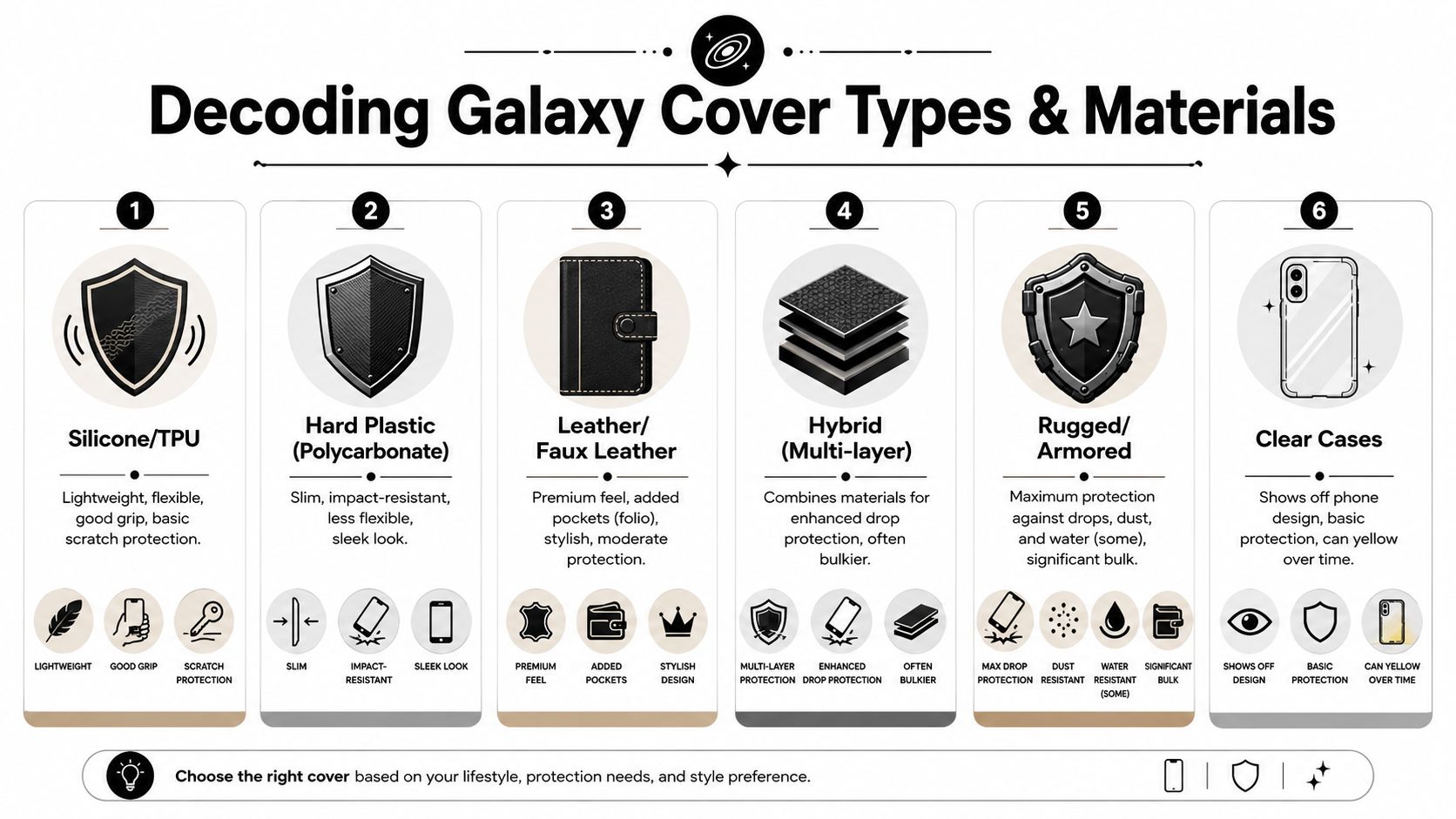
A phone cover is a bit like a jacket. Some are light and comfortable but won't do much in a storm. Others are bulky, hot, and ugly, but they'll handle rough conditions better. The trick is knowing what trade-off you're buying.
Form factors that actually change protection
Slim cases are the most common. They keep bulk down and usually improve grip, but they don't add much buffer around the corners. They suit careful users more than clumsy ones.
Rugged cases add layers, thicker edges, and reinforced corners. They're better for drops, but they make the phone heavier and larger in the pocket.
Wallet and folio cases protect the screen when closed and can be useful if you carry cards. Their weakness is that many become awkward one-handed, and the hinge area often wears out before the shell does.
Clear cases let you keep the phone's original look. The problem is practical rather than cosmetic. They show grime quickly, and lower-grade versions tend to age badly.
What the material tells you
TPU and silicone are the flexible materials recognized by many users. Think of TPU like the sole of a running shoe. It bends, grips well, and absorbs some shock. That makes it comfortable for daily use, but softer materials can stretch and lose shape.
Polycarbonate is the rigid plastic shell. It behaves more like a hard helmet. It keeps its shape better, feels neat, and often stays slimmer, but by itself it can feel slippery and less forgiving on impact.
Leather and faux leather are more about feel and finish. They can wear nicely if they're well made, and folio designs often use them well. But they're usually moderate protection, not heavy-duty protection.
Hybrid cases combine materials. That usually means a softer inner layer with a harder outer shell. When they're designed properly, hybrids give the best balance.
| Phone Cover Material Comparison | Drop Protection | Grip | Bulk | Durability |
|---|---|---|---|---|
| TPU / Silicone | Moderate | High | Low to moderate | Can stretch or degrade over time |
| Polycarbonate | Moderate | Low to moderate | Low | Keeps shape well but can crack |
| Leather / Faux Leather | Moderate | Moderate | Moderate | Wears with use, depends on finish |
| Hybrid | High | Moderate to high | Moderate to high | Strong overall if layers stay bonded |
| Rugged multi-layer | Very high | High | High | Built for abuse, less pocket-friendly |
| Clear TPU blend | Basic to moderate | Moderate | Low | Can yellow and show wear |
A good cover also works better when paired with a properly fitted screen protector. If you're building out full front-and-back protection, it helps to check Samsung screen protector options that fit case use properly.
What usually works and what usually disappoints
- Works well for most users. Hybrid cases with raised lips, covered buttons, and a firm fit around the frame.
- Works for light users. Slim TPU cases from brands that don't cut corners on fit.
- Looks good but disappoints often. Ultra-thin generic hard shells that protect against scratches but not much else.
- Needs more scrutiny. Cheap multi-part cases where glued sections or decorative panels can separate.
If the case flexes too easily around the corners, gets shiny fast, or feels loose around the buttons, don't expect it to save the phone in a real drop.
Ensuring Perfect Compatibility for Your Galaxy Model
The biggest buying mistake isn't choosing the wrong material. It's choosing the wrong model.
Samsung Galaxy phones look similar across a range, but the covers are not interchangeable. Not between generations, and often not even between variants from the same release. According to this Samsung phone case compatibility chart, Galaxy models have zero cross-compatibility between generations or even variants within the same series. The Galaxy S22 measures 146.0 x 70.6 mm, while the Galaxy S22 Plus measures 157.4 x 75.8 mm. That difference is enough to ruin the fit completely.
Why a near fit is still a bad fit
People often think, “It's only slightly different, it should be fine.” It won't be.
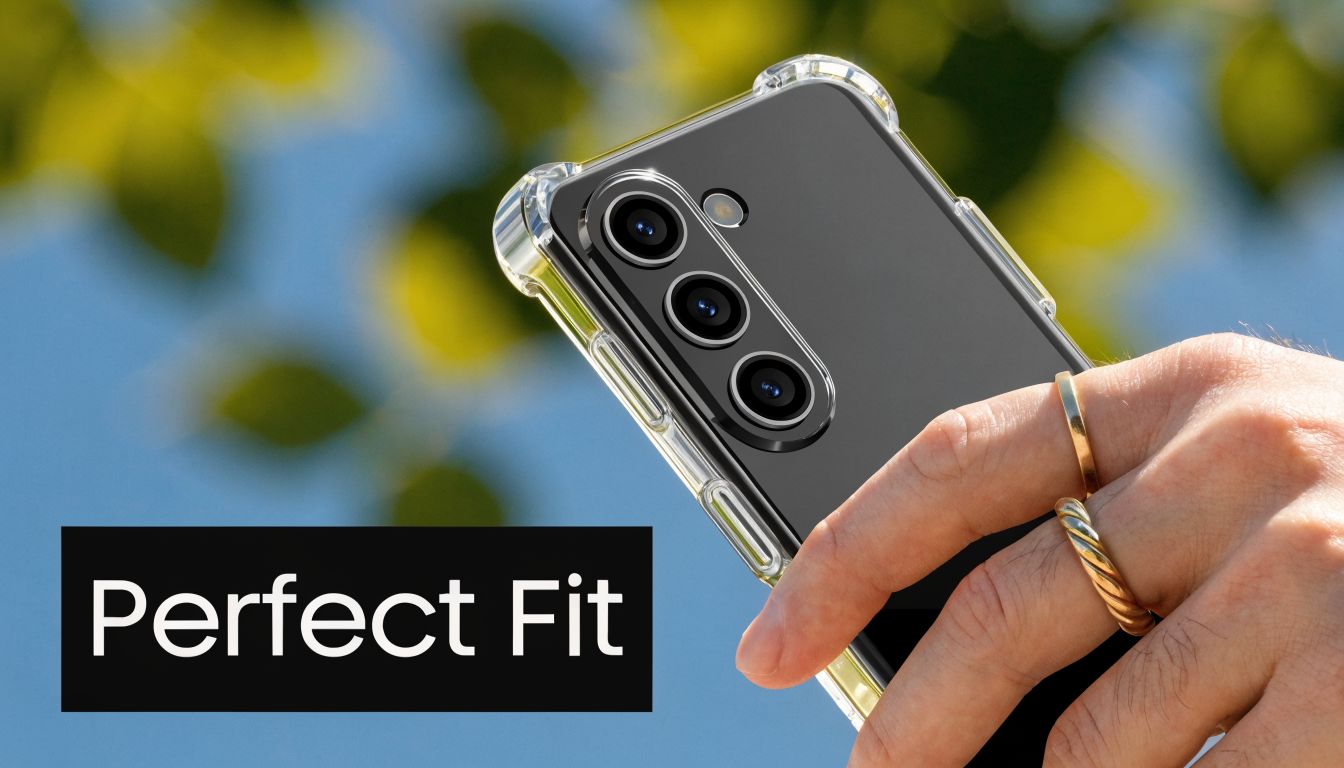
A case is shaped around exact dimensions, camera cutouts, side buttons, ports, speaker holes, and edge curves. If any of that is off, the case can press on buttons, leave one corner exposed, shift the phone inside the shell, or block part of the camera module. Even small dimensional errors matter because protection depends on the phone seating properly inside the case.
The damage pattern is predictable:
- Misaligned button covers can make volume or power buttons hard to press.
- Bad camera cutouts can clip photos or leave the camera ring exposed.
- Poor corner seating creates stress points instead of absorbing impact.
- Loose fit lets grit move between the phone and case, which marks the frame.
The model check that saves hassle
Before buying samsung galaxy phone covers, check the exact device name in Settings or on the retail box. Don't stop at “Galaxy S24” or “Galaxy A54” unless you're completely sure it isn't the Plus, Ultra, FE, or another close variant.
Buy for the exact model number, not what the phone looks like from the front.
Foldables need even more care. The hinge design and dual-section construction mean the wrong case doesn't just fit badly. It can interfere with how the phone opens, closes, or sits in the hand.
This is one area where guessing costs money. If the case doesn't fit perfectly, it isn't protective. It's just attached.
Balancing Protection Features and Daily Use
The strongest case on the shelf isn't always the right one. Plenty of people buy maximum protection, use it for a week, then take it off because it feels bulky, doesn't sit well in the pocket, or makes charging annoying. Once the case comes off, the phone is back to taking hits unprotected.
Maximum protection versus actual use
Rugged cases exist for a reason. For devices like Samsung's XCover line, rugged protection is built around serious requirements. Samsung states that rugged cases for models like the Galaxy XCover series are engineered to meet MIL-STD-810H, survive 1.5-metre drops, and maintain IP68 water resistance in the relevant design context on its Galaxy XCover business page. That level of protection needs thickness, structure, and stronger edge design.
That's excellent if you work outdoors, move between vehicles, climb ladders, or regularly put the phone down on rough surfaces. It's not always excellent if you live on wireless charging, wear fitted trousers, and want the phone to disappear into a pocket.
Here's the practical split:
- Choose rugged if your phone gets knocked around, handled with dusty hands, or carried on site.
- Choose hybrid if you want solid drop protection without turning the phone into a brick.
- Choose slim only if convenience matters most and you're realistic about the lower protection ceiling.
If you know you need more than a basic shell, it helps to compare heavy-duty phone cover options built for rougher use.
Charging, heat, and magnetic features
Wireless charging compatibility gets overlooked until the phone starts charging slowly or gets warm. Thick back panels, poor internal alignment, metal kickstands, decorative plates, and badly placed magnets can all interfere with charging and NFC use.
That matters more now because people expect the case to work with pads, car mounts, and magnetic accessories without fiddling. In practice, some covers are built for this and some only claim to be.
A good rule is simple. If wireless charging matters to you, buy a case that clearly states compatibility and doesn't overload the back with unnecessary layers or metal parts.
Here's a quick visual overview of features people often compare before buying:
Small features that matter every day
The best case often wins on boring details:
- Button feel. Buttons should click cleanly, not feel mushy.
- Lip height. Raised edges around the screen and camera matter when the phone lands face-down or slides on a bench.
- Grip texture. Smooth cases look clean but slip easier out of sweaty or wet hands.
- Port access. Charging cutouts need enough room for real cables, not just the one in the box.
A cover can be protective on paper and still be irritating in daily use. Once it becomes annoying, people stop using it properly.
Choosing a Cover for Perth Conditions and After a Repair
Perth is hard on phone covers in ways generic buying guides rarely mention. Heat, humidity, airborne salt, sunscreen residue, dusty car interiors, and beach use all age materials faster than people expect. That matters because a cover doesn't fail all at once. It slowly stops doing its job.
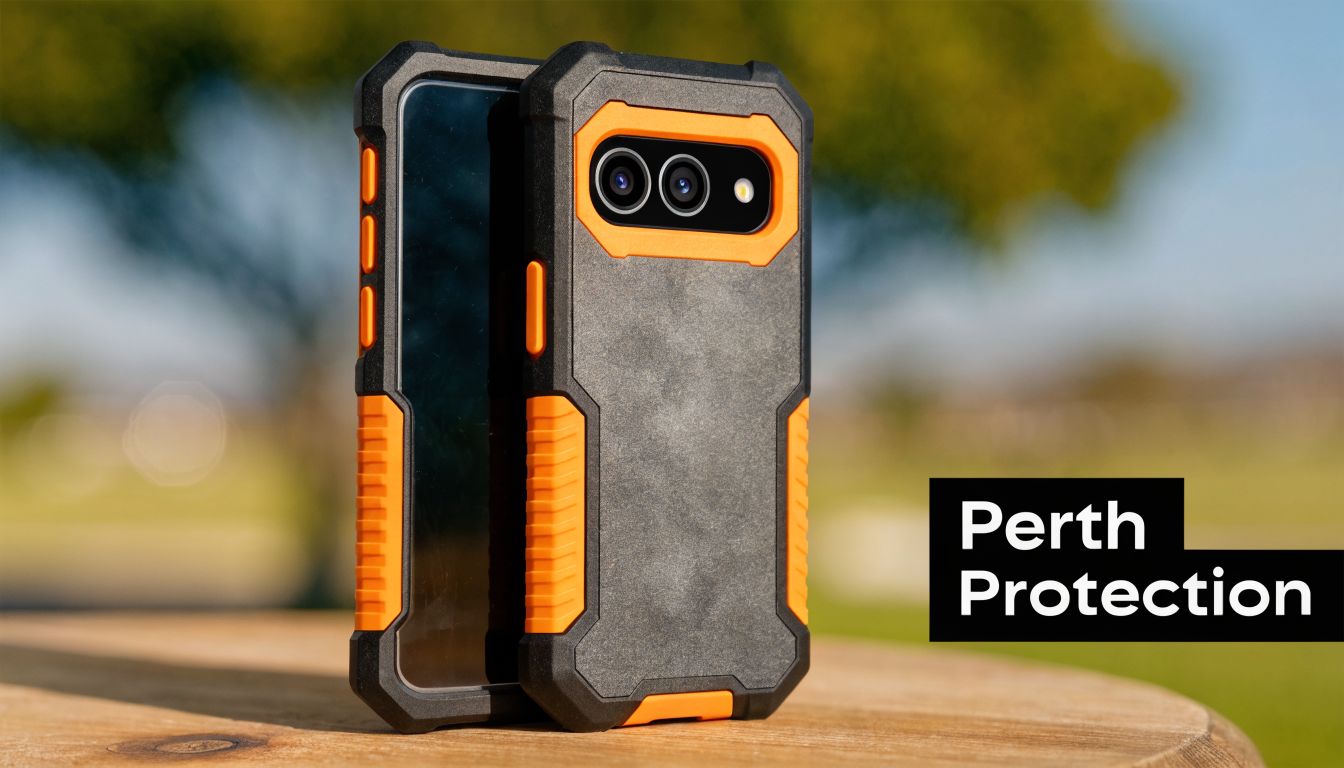
According to Samsung-linked source material cited in the brief, Perth's coastal climate has average humidity around 70%, and a WA University study found these conditions can accelerate adhesive failure and material degradation in 65% of common TPU and silicone covers within six months on Samsung mobile accessories content. Whether you live close to the coast or just spend plenty of time outdoors, that's a real buying factor.
Why cheap soft cases age badly here
The covers that struggle most are usually low-grade soft silicone or TPU options with glued-on extras, thin corner sections, or decorative outer coatings. In Perth conditions, they can become tacky, loosen around the frame, or start peeling where the layers join.
Once that happens, the case stops holding the phone tightly. That means drops transfer force badly, dust gets trapped more easily, and the corners can shift just enough to expose the edge of the screen or frame.
Hard-shell hybrids with better bonding usually hold up better here than bargain soft cases. Leather or fabric-finish options can also age well if they're made properly, but they still need cleaning and shouldn't be treated as waterproof protection.
A case that's already stretching, peeling, or lifting at the edges isn't “still okay”. It's overdue for replacement.
The best time to buy a proper cover
Right after a repair.
That's when people are most aware of the phone's value, and it's when protection matters most. A newly replaced display needs a case that sits correctly around the frame and gives the glass a raised edge from day one. Using an old worn case after a screen repair is one of the worst false economies in phone ownership.
If your Samsung has just been fixed, it makes sense to pair that repair with a cover check and, if needed, a fresh Samsung Galaxy screen repair follow-up solution. The key point is simple. Don't spend on restoring the phone, then trust it to a case that has already lost shape.
What to favour in Perth
For local conditions, look for:
- Firm corner structure rather than floppy edges.
- Fewer glued decorative parts that can separate.
- Textured sides for grip when hands are damp.
- A snug fit that won't relax quickly in heat.
- Materials that clean easily after sand, salt, or sunscreen exposure.
Perth buyers don't need the fanciest case. They need one that still works after real local use.
Simple Maintenance to Keep Your Cover Working Harder
Even a good case gets defeated by neglect. Dust, skin oils, sand, lint, and moisture build up where the phone and case touch. Over time that grime acts like an abrasive, and you end up with a worn frame, clogged speaker areas, and a case that no longer seats as tightly as it should.
A simple cleaning routine
Take the case off regularly and wipe both the phone and the inside of the cover. For TPU, silicone, and hybrid shells, use a soft cloth lightly dampened with mild soapy water, then dry everything fully before refitting. Don't put a damp case straight back on the phone.
For leather or folio cases, keep cleaning gentler. Use a dry or slightly damp soft cloth and avoid soaking the material. Leather handles wear better when you treat it like a wallet, not like a dishwashing sponge.
Clear cases need the most frequent attention because they show grime early. Cleaning won't stop ageing forever, but it does stop dirt buildup from making the case feel older than it is.
What to inspect before the case fails
A case should be replaced when its structure changes, not only when it looks ugly.
Check for these signs:
- Loose corners that no longer hug the phone tightly.
- Flattened lips around the screen or camera.
- Cracks in rigid shells near the corners or charging cutout.
- Stretching around buttons that leaves the sides sloppy.
- Peeling layers on hybrid or decorative designs.
Don't judge a case only by the back panel. Most failures start at corners, edges, and cutouts.
One habit that prevents hidden damage
Remove the case before cleaning the phone, especially after beach trips, dusty work, or rain exposure. Fine grit trapped under the case scuffs side rails and camera rings. If the phone has been near saltwater or damp gear, drying the outside isn't enough. You want the case off so moisture doesn't sit against the frame.
A worn case still looks like protection. That's why people keep using it too long.
The Right Cover Is Your Phone's Best Insurance
The smart way to buy samsung galaxy phone covers is to think like a repair tech, not like a casual shopper. Start with the exact model. Then match the material and design to how you use the phone. After that, factor in local conditions, especially if your phone spends time in cars, on site, near the coast, or in and out of bags all day.
A slim case can be fine. A rugged case can be the right call. A clear case can do the job if it's well made and replaced when it wears out. What doesn't work is buying by looks alone, ignoring fit, or assuming any case with raised edges will protect the phone properly.
The best cover is the one you'll keep on the phone because it fits, feels right, and still works after months of use. That's what prevents cracked screens, dented frames, charging issues caused by impact, and the repeat repairs nobody wants.
Good device ownership is rarely about one big trick. It's usually small decisions done properly. Fit the right cover, keep it clean, replace it when it's worn, and don't reuse a tired case after a repair. While you're sorting out protection and day-to-day Samsung setup, practical guides like this Gini Help guide to blocking numbers are useful too, because keeping a phone in good shape isn't only about hardware.
Frequently Asked Questions
Do samsung galaxy phone covers affect wireless charging?
Yes, some do. Thick materials, poor magnet placement, metal parts, and badly designed backs can reduce charging performance or create extra heat. In Australia, third-party covers aren't always optimised for Qi2. A 2025 CHOICE Australia report found that only 15% of tested third-party cases maintained full 30W+ charging speeds without overheating, as referenced in this Business Insider smartphones guide. If wireless charging matters, choose a case that clearly supports it and is RCM-compliant.
Is a rugged case always the best choice?
Not always. Rugged cases are excellent when the phone faces repeated drops, rough surfaces, dust, or outdoor work. But if the bulk annoys you enough that you stop using the case, it's the wrong case for you. Many users find the best results with a well-made hybrid that balances grip, edge protection, and everyday comfort.
Should I keep using my old case after a screen replacement?
Usually not unless it still fits tightly and shows no wear. A stretched or degraded case won't protect a newly repaired phone properly. Right after a repair is the best moment to start fresh with a case that fits well and gives the screen and frame proper edge protection.
Why do cheap clear or silicone cases fail sooner?
They often use softer compounds, weaker bonding, and thinner corner structure. In real use, that means stretching, yellowing, peeling, and reduced grip. Once the material changes shape, the cover may still look acceptable from the back while protecting badly where it matters most.
Can one Galaxy case fit another Galaxy if they look similar?
No. Galaxy phones have model-specific dimensions, camera layouts, and button positions. A case that is close is still wrong. Poor fit leads to bad button response, exposed corners, and weaker impact absorption.
If your Samsung has a cracked screen, battery issue, charging fault, water damage, or you just want hands-on advice about protecting it properly after a repair, CTF Mobile Phones & Computer Repairs is a solid local option in Perth. They handle same-day common repairs, work on Samsung models every day, and can help you avoid the usual cycle of fix, drop, repeat.