

So, what exactly is a hydrogel screen protector? Think of it as a flexible, self-healing film made from some pretty clever polymers. It’s designed to act like a second skin for your device's screen. Unlike the rigid tempered glass protectors you might be used to, this one absorbs impacts instead of shattering. It can even automatically repair minor scratches, which makes it a fantastic choice for the curved-edge phones we see everywhere now.
Understanding the Second Skin for Your Screen
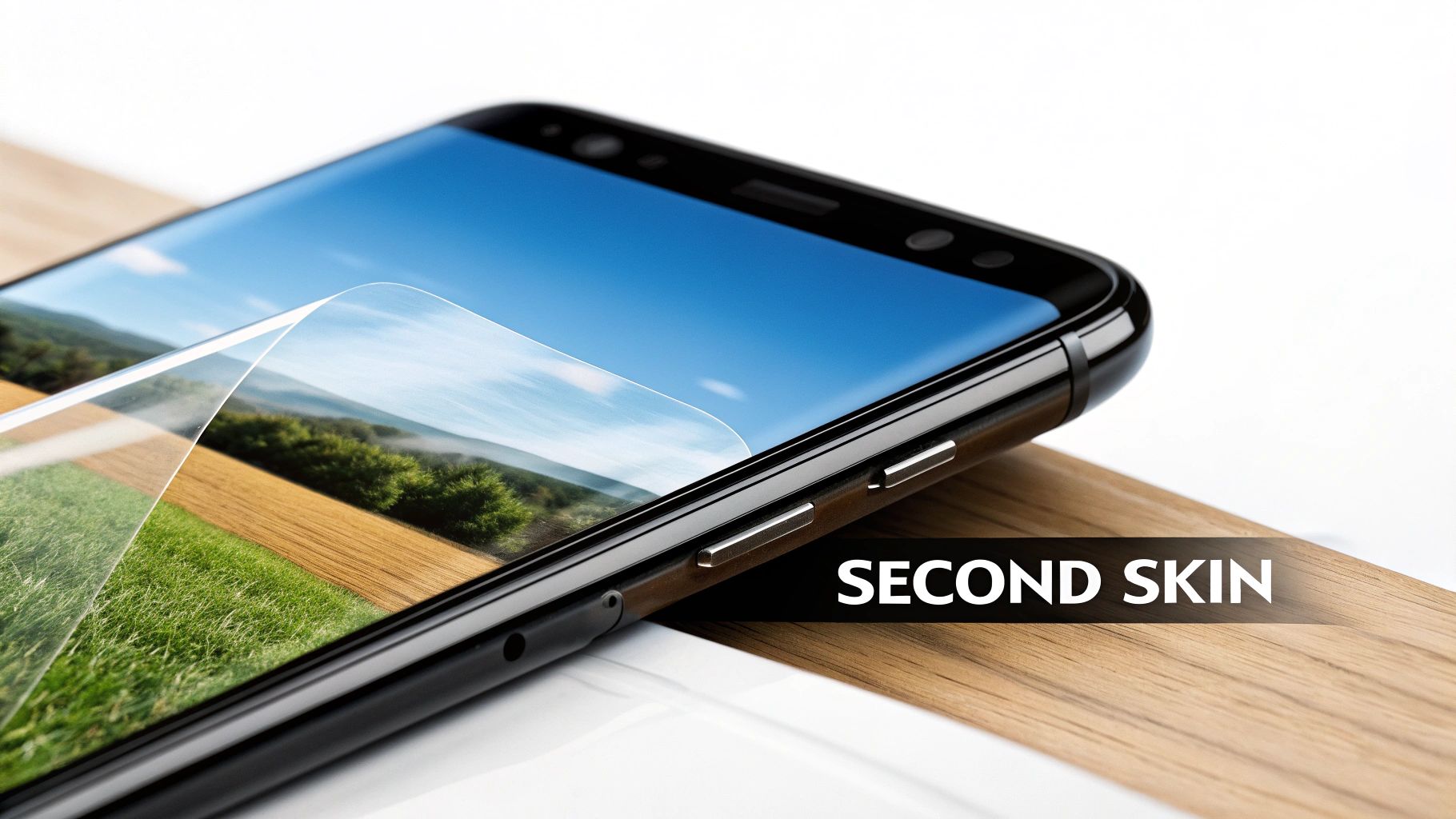
Picture a material that’s not quite solid, but definitely more than a liquid. That's essentially the magic behind a hydrogel screen protector. It’s made mostly of water held together by a network of sophisticated polymers, creating a soft, rubbery, yet surprisingly tough layer over your phone's display.
You could almost think of it as a high-tech gel cushion. When something hits your screen, the hydrogel’s flexible structure takes the hit, absorbing and spreading the force across its surface. This is a complete departure from how tempered glass works, which just puts up a hard barrier that cracks when the pressure gets too much. The hydrogel’s resilience means it can take the daily knocks and bumps in its stride without showing permanent damage.
The Science of Self-Healing
What really sets hydrogel protectors apart is their ability to "self-heal". The polymer chains making up the film aren't locked into a rigid grid. When a light scratch happens—say, from keys or coins in your pocket—these chains can actually shift and reconnect. Over about 24-48 hours, that annoying little mark often just fades away.
It's a bit like how memory foam bounces back to its original shape. The material is engineered to hold a specific structure, so it naturally works to smooth out those minor imperfections.
Key Takeaway: A hydrogel protector offers a more dynamic kind of defence. It’s all about absorbing impacts and repairing small scratches, rather than just providing the brute-force hardness of traditional protectors.
This technology is a game-changer for modern smartphones, especially those with curved or "waterfall" displays. A flat, rigid piece of glass just can't hug those curves properly. You often end up with gaps along the edges that attract dust and can mess with touch sensitivity.
A hydrogel film, on the other hand, is supple enough to mould perfectly to every contour. This gives you true edge-to-edge coverage, creating a smooth, barely-there layer of protection that doesn’t get in the way of how your screen looks or feels.
Of course, it's not invincible. While hydrogel is great at absorbing shocks from everyday tumbles, it won't stop the screen from cracking in a really severe drop. For those heart-stopping moments, a professional repair is your only real fix. If you're faced with a shattered display, it's worth looking into a quick and reliable phone screen replacement in Girrawheen to get your device back on its feet.
Hydrogel vs. Tempered Glass: Which Is Better for You?
Deciding between a hydrogel screen protector and its tempered glass cousin isn't really about which one is "stronger." It's more about figuring out which one fits your phone, your habits, and what you value most in protection. They take completely different approaches to keeping your screen safe.
Think about phones with those sleek, curved "waterfall" edges. A stiff, flat piece of tempered glass just can't cover them properly, almost always leaving an annoying gap around the sides. This is where hydrogel protectors really come into their own. Their soft, flexible material wraps around every curve for a true edge-to-edge fit, feeling totally seamless and stopping dust from getting trapped underneath.
On the other hand, if you've got a device with a standard flat screen and love that super-smooth, glassy feel, tempered glass is a fantastic option. It provides much better defence against deep scratches from things like keys jangling in your pocket or a bit of grit, which the softer hydrogel material can struggle with.
Impact Absorption vs. Scratch Resistance
The real difference comes down to how they handle danger. A hydrogel screen protector is basically a shock absorber for your phone. When you drop it, the soft film spreads the force of the impact across its surface, which can often save the actual screen from cracking. It's designed to cushion the blow.
Tempered glass works more like a rigid shield. It’s brilliant at fending off sharp, direct scratches and has a hardness rating that hydrogel just can't compete with. But that very rigidity is its downfall in a serious drop—the protector will shatter to absorb the shock, meaning you'll need to replace it right away.
This trade-off is the heart of the matter. Are you more concerned about everyday bumps and minor drops, or are you trying to prevent deep, ugly scratches? Your answer will likely push you towards either the flexible strength of hydrogel or the hard-as-nails integrity of glass.
Let's break down the key differences in a simple table to make the choice a bit clearer.
Feature Showdown: Hydrogel Film vs. Tempered Glass
| Feature | Hydrogel Screen Protector | Tempered Glass |
|---|---|---|
| Fit on Curved Screens | Excellent, provides full edge-to-edge coverage. | Poor, often leaves gaps and edges unprotected. |
| Scratch Resistance | Good against minor scuffs, but vulnerable to deep scratches. | Excellent, highly resistant to keys, coins, and sand. |
| Impact Protection | Very good, absorbs and disperses shock from drops. | Good, but shatters upon significant impact to save screen. |
| Self-Healing | Yes, minor scratches often disappear over 24-48 hours. | No, scratches are permanent. |
| Feel & Sensitivity | Ultra-thin and soft, maintains original touch sensitivity. | Smooth and slick, mimics the feel of the original screen. |
| Clarity | High, but can have a slight "orange peel" texture. | Crystal clear, offers the best visual experience. |
| Installation | Can be tricky; wet application often required. | Easier for most people to apply bubble-free. |
This side-by-side view shows there’s no single "best" option—just the best option for you.
The Feel and Aesthetics
How you interact with your screen every day is a huge part of the decision.
- Touch Sensitivity: Hydrogel films are incredibly thin, so much so that you often forget they're even there. This is perfect for maintaining the snappy response you need for gaming or typing quickly.
- Self-Healing: One of hydrogel's neatest tricks is its ability to smooth over small marks. Light scuffs from fingernails or everyday use tend to fade away within 24-48 hours, keeping your screen looking fresh.
- Clarity and Feel: Nothing quite beats the crystal-clear view and slick glide of tempered glass. Many people prefer it simply because it feels exactly like their phone's original screen.
For a really deep dive into the specific advantages of each, you can check out this guide offering a direct comparison between hydrogel and tempered glass screen protectors. It’s a great resource for weighing up the finer details.
At the end of the day, remember that neither option is indestructible. A really bad drop can still break your screen, no matter what protector you have on it. When that happens, knowing what to do next is important. For bigger screens, for instance, understanding the typical https://ctf.com.au/ipad-screen-repairs-cost/ can help you budget for a professional repair. The best screen protector is simply the one that fits your life, giving you confidence as you go about your day.
What Are the Pros and Cons of Hydrogel Protectors?
So, is a hydrogel screen protector the right choice for your phone? Like anything, it’s a trade-off. You need to weigh its unique strengths against its weaknesses to see how it fits with the way you use your device every day. It's not just about stopping scratches; it's about the entire user experience.
Let's get into the details so you can make a confident decision.
The most talked-about feature is its self-healing capability. We're not talking about deep gouges, but those annoying little scuffs and light scratches from daily use—think fingernails or sliding your phone on a table—often disappear on their own within 24 to 48 hours. This clever trick keeps your screen looking pristine for much longer.
Another huge win is how perfectly it works with curved screens. Glass is rigid and struggles to cover those slopes, but a flexible hydrogel film wraps around every contour for true edge-to-edge protection. This seamless fit also makes it incredibly case-friendly, so you don't get that frustrating edge-lifting when you snap on a case.
The Upside: Why People Choose Hydrogel
Here's a quick rundown of the main reasons you might opt for a hydrogel protector:
- Amazing Impact Absorption: Think of it like a shock absorber for your screen. The soft, gel-like material is brilliant at dispersing the force from a drop or knock, which can be the difference between a scare and a cracked screen.
- Barely-There Feel: Hydrogel films are so thin you'll probably forget they're even on. This means your screen’s touch sensitivity stays just as responsive as it was out of the box, without adding any noticeable bulk.
- Works Perfectly With Fingerprint Scanners: The slim profile is a lifesaver for phones with in-display fingerprint sensors. Thicker tempered glass protectors often cause issues, but hydrogel almost never interferes with ultrasonic or optical scanners.
The Downside: Things to Keep in Mind
Of course, no screen protector is invincible. The very softness that makes hydrogel great at absorbing impacts also makes it more vulnerable to deep cuts or punctures from sharp objects. While it handles drops well, it just doesn't have the same brute hardness as tempered glass against a direct scratch from your keys.
Some people also notice a slightly different texture under their finger—it can feel a little more "grippy" or "rubbery" compared to the smooth glide of glass. The installation can also be a bit more fiddly. It often involves a wet application method, and you might need a little patience as any tiny bubbles work themselves out over a day or two.
This decision guide makes it simple to see where each protector type shines.
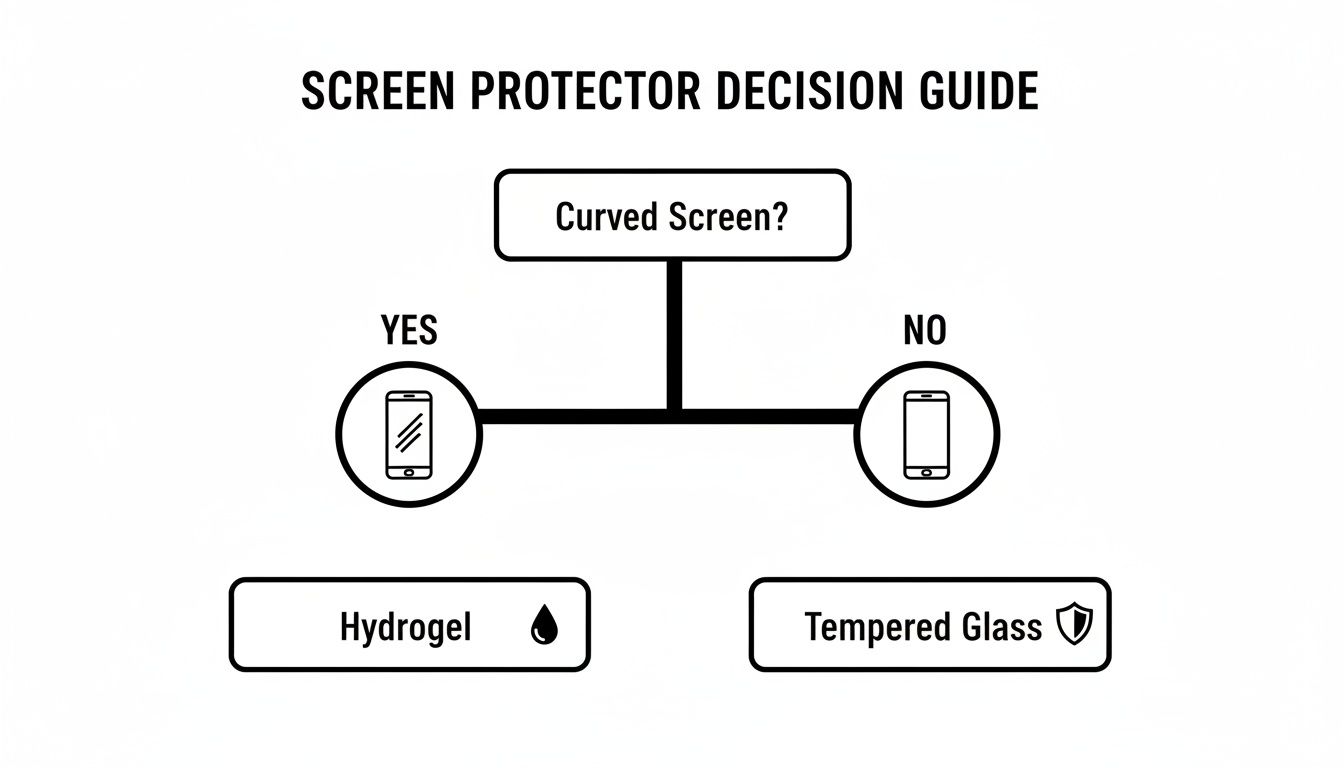
As the chart shows, if you’ve got a phone with a curved display, a hydrogel protector is really the best way to get that perfect, gap-free fit.
Ultimately, it all boils down to your specific phone and what you value most in a protector. Here in Australia, with so many popular phones featuring curved screens, hydrogel has become a go-to solution for many. It's clear they're a growing and important part of the phone accessory market. If you're interested, you can find more insights into the screen protector market and its latest trends.
How to Install a Hydrogel Screen Protector Perfectly
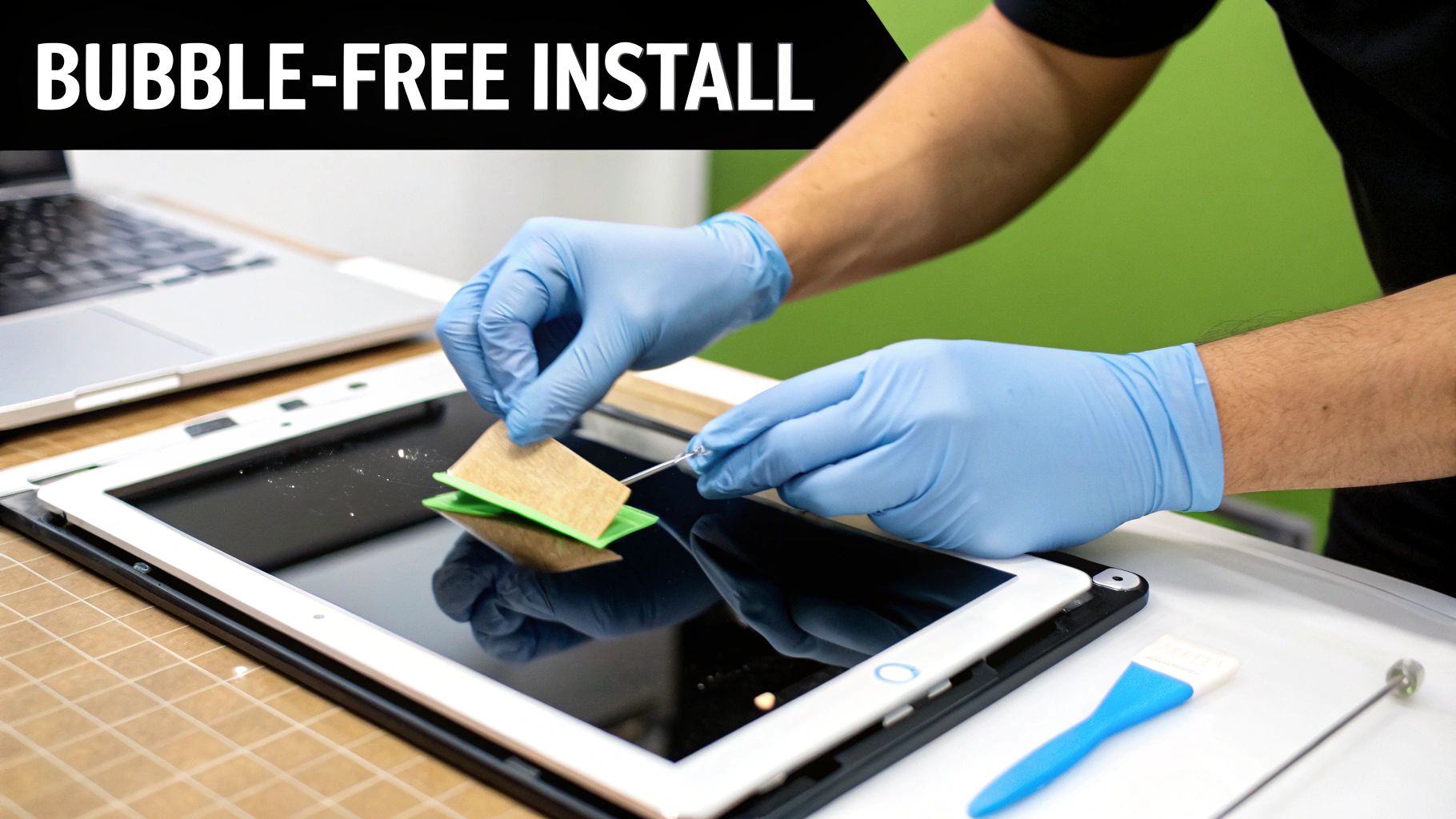
Look, even the best hydrogel screen protector on the market is only as good as its installation. The good news is that you can absolutely get a perfect, bubble-free finish at home. It just takes a bit of patience and the right approach. The secret? It's all in the prep work. A perfectly clean screen is the foundation for a flawless result.
First things first, find a clean, well-lit space with as little dust floating around as possible. Give your hands a good wash, too—the oils from your fingers are the enemy of a clean application and will leave smudges that are impossible to fix once the protector is down.
Preparing Your Screen for Application
This is the most critical stage. Your kit will almost certainly come with a wet alcohol wipe and a dry microfibre cloth, and you need to use them in that order.
- The Wet Wipe: Give the entire screen a thorough clean to lift off any fingerprints, smudges, and general grime. Don't forget to get right into the edges where dust loves to hide.
- The Dry Cloth: Straight after wiping, use the microfibre cloth to dry the screen and polish away any remaining streaks.
- The Dust Sticker: This is your final check. Gently tap the dust-removal sticker all over the screen. It’s designed to pick up those tiny lint particles you can’t even see. I always recommend holding the screen up to a light to catch any last specks.
Applying the Hydrogel Film
Most modern hydrogel kits have a clever multi-layer design that makes lining things up much easier, sometimes called the 'hinge method'. You’ll start by peeling back just the central strip of the backing paper, which exposes a small line of adhesive.
You'll use this sticky section to get the protector perfectly aligned with your phone’s camera, speakers, and edges. Take your time here. Once you're happy with the position, press that central strip down firmly. This creates a 'hinge' that locks the protector in place for the next steps.
Pro Tip: When you're smoothing the film down, always start from the centre and push outwards. This is the key to pushing air bubbles out towards the edges instead of trapping them in the middle.
Now, using the little squeegee they provide, lift one side of the film, peel off the protective layer underneath it, and then smoothly push the squeegee from the centre to the outer edge. You'll see the film lay down perfectly as you go. Just repeat the process for the other half. The final step is to peel off the thin top protective layer, and you're done!
Don't be alarmed if you notice a few tiny bubbles or a faint line down the middle where the hinge was. This is totally normal. Hydrogel is a unique material that needs 24-48 hours to fully 'settle'. During this time, those little imperfections will usually disappear all by themselves.
Of course, a screen protector can only protect a healthy screen. If your display was already cracked or damaged, the protector won't hide it. In that situation, your best bet is to find a professional for a tablet screen repair near me to get your device back to 100% before protecting it.
Maintaining Your Screen Protector for Long-Lasting Clarity
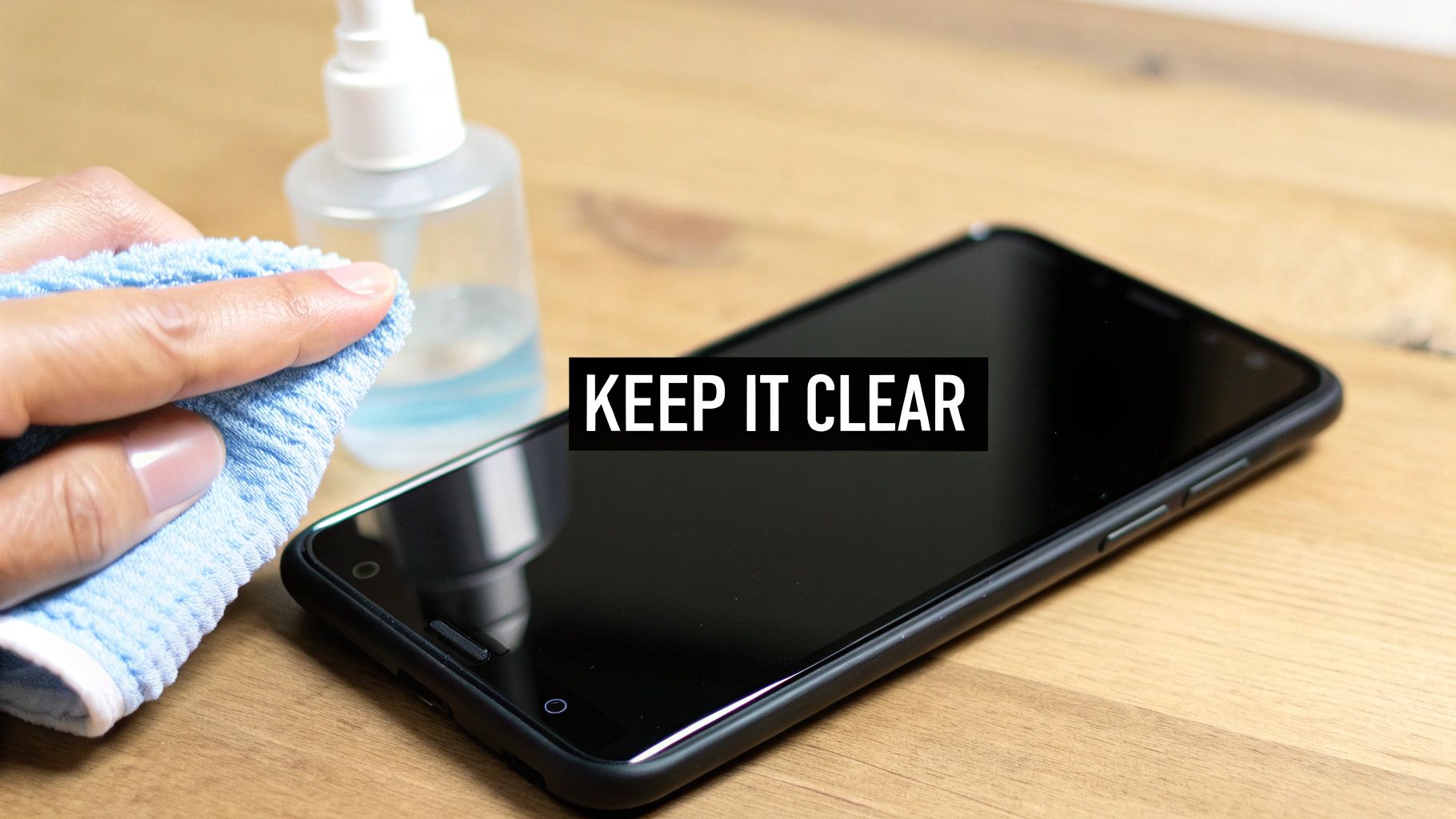
Alright, so you’ve got your new hydrogel protector fitted perfectly. It looks fantastic, but how do you keep it that way? The secret is a simple and consistent cleaning routine. A little bit of care goes a long way in keeping the screen looking pristine and making sure the protector lasts as long as possible.
The best tool for the job is a soft, lint-free microfibre cloth – pretty much the same kind you'd use for your sunnies. If you’re dealing with stubborn fingerprints or smudges, just dampen the cloth slightly with a bit of water or a dedicated screen cleaning spray. Steer clear of harsh chemicals, alcohol wipes, and especially paper towels. These can strip away the oleophobic (oil-repellent) coating and even scratch the film's surface over time.
Thinking about it, the principles for keeping any clear surface spotless are pretty similar. In fact, many of the gentle techniques you'd use for how to clean glasses for crystal-clear vision work perfectly here too.
When Is It Time for a Replacement?
Even the best-cared-for hydrogel protector won't last forever. Its entire purpose is to absorb damage that would otherwise hit your expensive screen. Knowing what to look for will tell you exactly when it’s time to swap it out for a new one.
Key Takeaway: A hydrogel protector is designed to be sacrificial. It takes the hits for your screen. Recognising when its protective qualities are diminished is the key to keeping your device's screen safe and clear.
Keep an eye out for these tell-tale signs:
- Deep Scratches: While minor scuffs often heal themselves, any deep gouges that are still visible after 48 hours have permanently damaged the film.
- Persistent Lifting: If the edges or corners start to peel up and refuse to stick back down, it’s a problem. Gunk and dust will get trapped underneath, making the protector less effective.
- Discolouration or Cloudiness: Over time, exposure to UV light and oils from your skin can cause some films to yellow or look hazy, which ruins your screen's beautiful display.
- Stretching or Bubbling: A nasty drop or impact can sometimes stretch the material or create air bubbles that you just can't smooth out. That's a clear signal it's done its job and needs replacing.
Got Questions About Hydrogel Screen Protectors?
It’s completely normal to have a few questions before you commit to a new type of screen protection. After all, your phone is a big investment. Let's run through some of the most common things people ask, so you can feel confident you're making the right choice.
One of the first things people wonder about is the "self-healing" feature. It sounds like something from a sci-fi movie, but it's actually just clever material science at work. The film is a flexible polymer that has a kind of 'memory'. When it gets a minor scratch, the material slowly flows back into place, usually within 24-48 hours, making the mark disappear. Think of it like a memory foam pillow bouncing back to its original shape.
This flexibility also brings up another frequent question: how durable is it really? While hydrogel is fantastic at absorbing the shock from a drop, it is a softer material than glass. This means a sharp object, like your keys in a tight pocket, could cause a deeper cut that won't heal.
Will It Mess With My Fingerprint Scanner?
This is where hydrogel protectors really shine. So many new phones have fingerprint scanners built right into the screen, and they can be incredibly picky about what you put on top of them.
Because a hydrogel screen protector is so thin and flexible, it almost never causes issues with these sensors. The film clings tightly to the glass, creating a perfect connection that allows the scanner to read your print just as quickly and accurately as it would on a bare screen. No more of those frustrating "try again" errors you often get with rigid glass protectors.
Key Insight: The ultra-thin profile of hydrogel is its biggest advantage for device compatibility. It ensures features like in-display fingerprint readers and sensitive touch controls work exactly as they were designed to.
How Do I Take a Hydrogel Protector Off?
Taking a hydrogel protector off is incredibly easy and much safer than removing tempered glass. You don't have to worry about it shattering into tiny, sharp pieces.
Just get a fingernail under one of the corners and gently peel it back. It should come off in one clean sheet. The adhesive is strong enough to keep it in place during daily use but won't leave any sticky gunk on your screen when you remove it. If a corner gives you a bit of trouble, a quick blast of warm air from a hairdryer on its lowest setting for a few seconds will soften the adhesive right up.
If you're still on the fence about fitting it yourself or have questions about your specific phone model, our team at CTF Mobile Phones & Computer Repairs is always ready to help. We offer professional advice and fitting services to make sure your device is protected perfectly right from the start. Pop over to https://www.ctf.com.au to learn more.