

It’s a feeling we all know and dread. That slow-motion fall, the sickening crunch of your phone hitting the pavement, and that moment of hesitation before you dare to pick it up. And there it is: a spiderweb of cracks across what was once a perfect screen.
A shattered screen is more than just a cosmetic issue. It’s a major disruption. Suddenly, your go-to device for work, navigation, and keeping in touch with loved ones becomes a frustrating, barely-usable piece of tech. Your digital life grinds to a halt.
If you're staring at a broken screen right now, this guide is for you. We’ll cut through the confusion and help you figure out what to do next. Should you try a DIY repair kit or is it time to call in the professionals? For anyone in Perth with a damaged device, we’ll lay out your options clearly.
Navigating Your Repair Options
Choosing the right path forward means understanding the extent of the damage, the potential costs, and the risks involved. What looks like a simple crack on the surface can sometimes mask deeper problems with the touch functionality or the display panel itself.
Attempting a fix yourself might seem like a good way to save a few dollars, but it's a risky move without the right tools and know-how. One wrong move could turn a repairable screen into a completely broken phone. On the other hand, finding a professional you can trust can feel like a challenge. You need a shop that provides:
- Transparent Pricing: You want clear, upfront quotes with no nasty surprises.
- Quality Parts: Using reliable components is key to getting your phone back to its original performance.
- Expertise and Warranty: You need a technician with the skills to do the job properly and the confidence to guarantee their work.
A broken screen is more than a cosmetic flaw—it's a barrier to communication, productivity, and connection. Choosing the right repair path is the first step toward restoring not just your device, but your peace of mind.
This guide will give you a clear roadmap. We’ll help you assess the damage, weigh up the pros and cons of DIY versus professional repair, and show you what to expect from a top-notch repair service. For Perth locals, knowing that expert help from places like CTF Mobile Phones & Computer Repairs is just around the corner can make all the difference. Our goal is to give you the information you need to get your digital life back on track—quickly, safely, and without the extra stress.
Decoding the Damage: Is It a Simple Crack or Something More?
So, you’ve dropped your phone. After that heart-stopping moment, the first look at the screen can be a shock. But not all broken screens are the same, and figuring out exactly what's wrong is the first, most important step toward getting it fixed properly and without overspending.
Think of your phone’s screen as a high-tech sandwich. The top slice is the tough outer glass. Below that is the digitiser, the magic layer that senses your touch. The filling is the LCD or OLED panel, which actually shows you the pictures. A drop can damage just one of these layers, or it can wreck the whole lot. Knowing which part is busted will tell you how complex—and expensive—the repair is going to be.
Before you jump into a DIY kit or call a pro, you need to play detective. A good diagnosis means you’ll understand what a repair quote actually means, you can ask the right questions, and you won’t get talked into paying for parts you don’t need.
Just a Cosmetic Crack
This is the best-case scenario for a bad situation. A simple crack in the top layer of glass is the most common and least severe type of damage.
You’ll know it’s just the glass if:
- The display itself looks perfectly fine underneath the spiderweb of cracks.
- Your touch screen works perfectly everywhere, without any glitches.
- There are no weird black spots, discoloured lines, or flickering.
It's a bit like a chip in your car’s windscreen; it's ugly and annoying, but the car still runs just fine. But don't ignore it. That crack has weakened the screen's structure and left the sensitive electronics underneath exposed to dust and moisture. It’s a good idea to get it sorted sooner rather than later.
This flowchart can help you visualise what to do next.
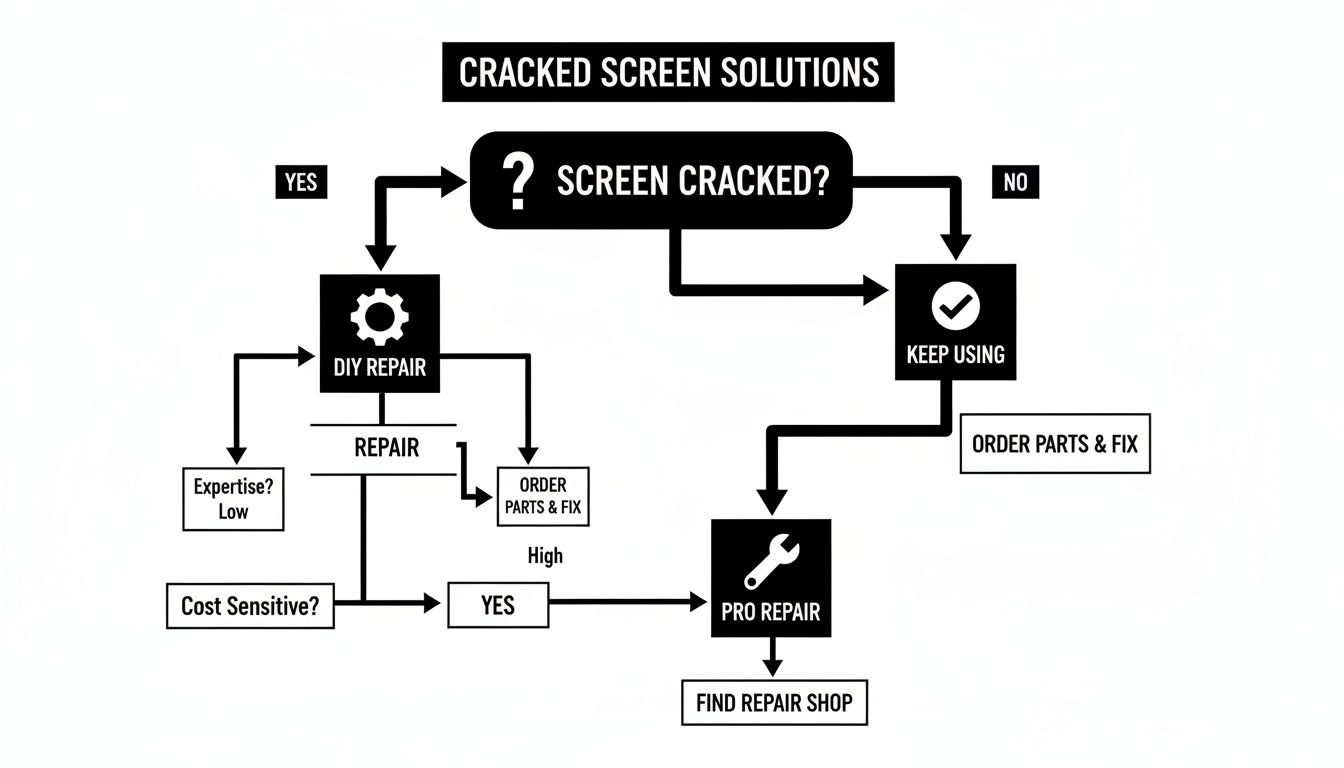
As you can see, the path forward—whether you try it yourself or bring it to an expert—starts with getting the diagnosis right.
When Your Touch Stops Working
If your cracked screen is also acting possessed, you’ve probably damaged the digitiser. This is the invisible, grid-like layer that translates your taps and swipes into commands. When it breaks, your phone becomes a very frustrating paperweight.
Look out for these signs of a busted digitiser:
- "Ghost touches": The phone starts doing things on its own, as if an invisible finger is tapping away.
- Dead spots on the screen that don't respond to your touch at all.
- Apps launching randomly or the keyboard typing pure nonsense.
This kind of damage is more serious than just a cracked piece of glass. On most modern phones, the glass and digitiser are bonded together into a single unit, so both have to be replaced at the same time.
Critical Display Damage
This is the big one. The most serious kind of screen damage is when the actual LCD or OLED panel—the heart of your display—is broken. When this happens, your phone is pretty much out of action.
You’ll know you've got critical display damage if you see black, ink-like splotches, bright green or purple vertical lines, a completely black screen (even though you know the phone is on), or some serious flickering.
These are all signs that the hardware that creates the image has failed. This is easily the most complex and costly screen repair because it means replacing the entire screen assembly. With Australians now hanging onto their phones for an average of four years, getting a screen fixed properly is more important than ever. Here in Perth, our active lifestyles mean phones take a tumble pretty often, so we see this kind of damage all the time. You can learn more about how our phone habits are changing from market trends analysis over at Cybershack.
DIY Repair Kits vs. Professional Service
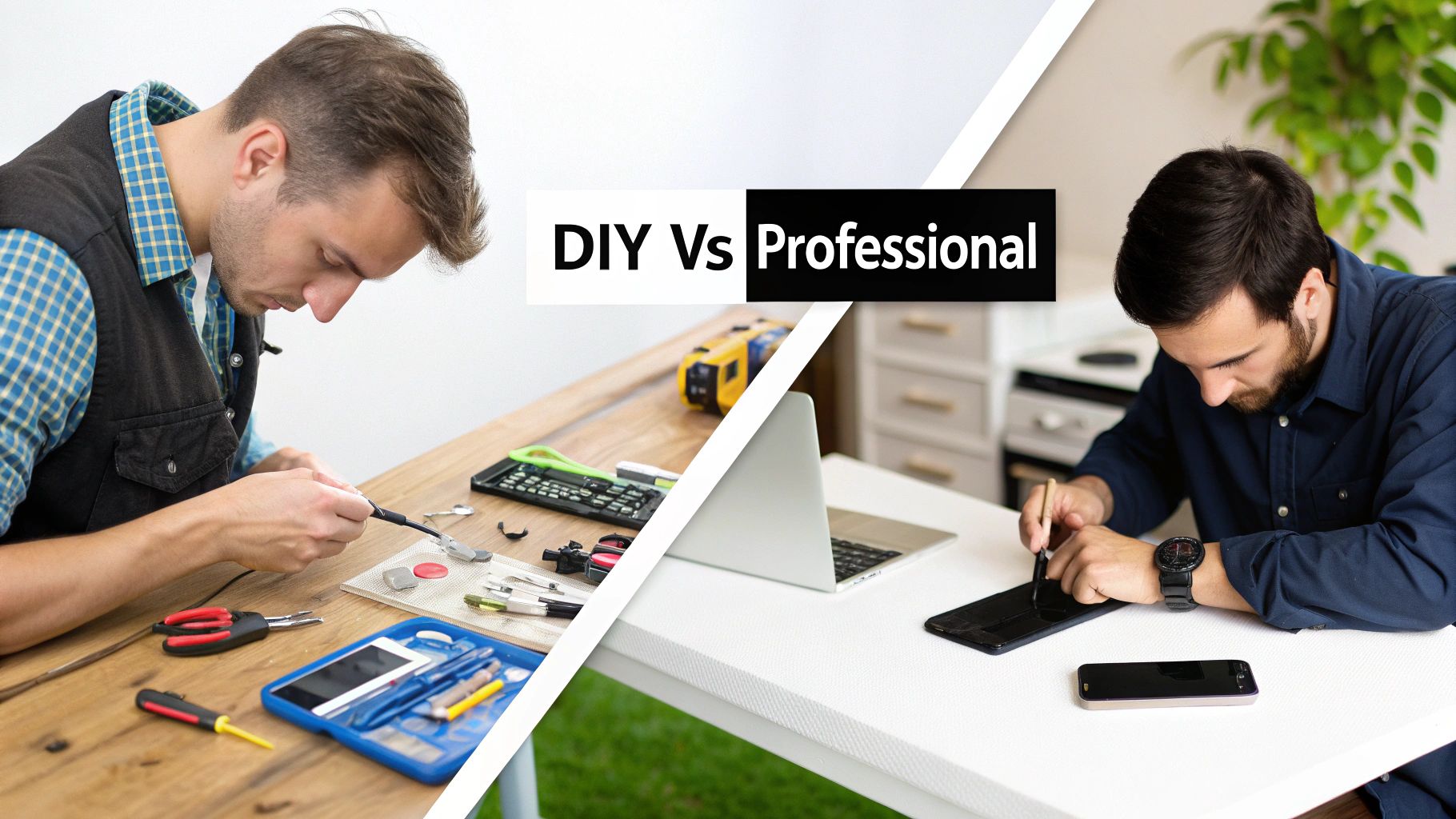
That heart-sinking moment when your screen shatters leaves you with a big decision. Do you roll up your sleeves, order a DIY kit online, and try to save a few dollars? Or do you hand it over to a professional who’s done this hundreds of times? The path you choose could be the difference between a phone that looks brand new and a very expensive paperweight.
The temptation of a DIY fix is easy to understand. The kits you see online are cheap, and there's a certain appeal to fixing something yourself. But this route is littered with hidden traps that can quickly turn a simple fix into a complete catastrophe.
Modern smartphones are marvels of engineering, but they're not built for easy tinkering. Inside that slim case is a complex puzzle of tiny screws, paper-thin ribbon cables, and delicate components. Trying to repair a mobile phone screen without the right experience is a high-stakes gamble where one wrong move can cause irreversible damage.
The True Cost of DIY Repairs
The price tag on that DIY kit is just the beginning. The real cost includes your time, the stress, and the very real risk of breaking something else in the process. It's a job that demands immense patience, a steady hand, and specialised tools—things that a professional technician has spent years mastering.
Before you click "buy," just think about what can go wrong:
- Stripping a tiny screw: It sounds minor, but it can make it impossible to properly seal the device, compromising its water resistance and structural integrity.
- Tearing a ribbon cable: These fragile connectors link everything from the screen to the cameras and battery. A tiny tear can kill your camera or leave you with a phone that won't charge.
- Damaging the logic board: A slip of a tool or a bit too much pressure can fry the phone's "brain," turning your device into a useless brick.
A professional repair isn't just about paying for a new screen. It's about paying for the expertise to avoid a dozen other potential problems. The real value is in the disasters you don't create.
On top of all that, a DIY repair will almost certainly void any remaining manufacturer's warranty. If another, unrelated issue pops up later, you're completely on your own. That initial saving doesn't look so good when you’re suddenly facing the cost of a brand-new phone.
The Professional Advantage
Going to a trusted repair shop like CTF Mobile Phones & Computer Repairs is an investment in certainty. You aren't just buying a replacement part; you're paying for a service backed by deep experience, the right gear, and a solid guarantee.
A professional service brings several key advantages to the table that a DIY kit just can't match. This includes access to high-quality parts that have been tested for performance and compatibility, ensuring your phone works exactly as it should.
Technicians also use specialised equipment designed for these delicate operations, from precision screwdrivers and heat guns to anti-static mats that protect your phone’s sensitive electronics. This professional-grade setup drastically cuts the risk of accidental damage. For intricate models like the iPhone X, understanding the specifics is vital; a professional iPhone X screen replacement shows just how much detail and care is involved.
DIY vs Professional Screen Repair: A Head-to-Head Comparison
To help you see the full picture, we’ve put together a straightforward comparison of the two approaches. This table lays out what you're really getting with each option.
| Factor | DIY Repair Kit | Professional Repair (like CTF Mobile Phones) |
|---|---|---|
| Initial Cost | Lower upfront cost for the kit. | Higher initial cost, but includes labour and warranty. |
| Risk Level | Very High. Risk of permanent damage, voiding warranty, and personal injury. | Very Low. Technicians are insured, and their work is guaranteed. |
| Time & Effort | Can take several hours, requires research and intense focus. | Fast turnaround, often completed in about an hour. |
| Parts Quality | Varies wildly. Often low-quality parts with no guarantee. | High-quality, tested parts sourced from reliable suppliers. |
| Tools Required | Basic tools included, often of poor quality. Specialised tools needed. | All necessary professional-grade tools are on hand. |
| Warranty | None. If the fix fails or you break something else, you bear the cost. | Yes. Covers both the part and the labour for a set period. |
At the end of the day, while saving a bit of cash is always tempting, the huge risks that come with a DIY screen repair just aren't worth it. For a device as essential as your phone, the expertise, speed, and security of a professional service offers unbeatable value and, most importantly, peace of mind.
What to Expect at a Professional Repair Shop
Handing your phone over to a stranger can be nerve-racking. Let's face it, that little device holds a huge part of your life. A good repair shop gets this. They know it's about more than just fixing glass—it's about earning your trust and making a stressful situation feel simple and sorted.
When you walk in, the first thing that should happen is a proper diagnosis. A real pro doesn't just glance at the cracks. They'll run a full check on the device to understand the real extent of the damage, testing the screen's touch response and looking for any hidden issues with the display underneath.
This initial check is everything. It means you get an accurate, no-obligation quote right then and there. No hidden fees, no surprise costs later on. The price you’re quoted should be the final price, covering both the premium parts and the skilled labour needed to repair your mobile phone screen.
Your Phone's Journey Behind the Counter
Once you give the go-ahead, your phone is in the hands of a specialist. This is where the magic happens, thanks to a combination of expertise and purpose-built tools. The technician will work in a clean, static-free space to protect all the sensitive electronics inside your phone.
The process usually breaks down into a few key steps:
- Careful Disassembly: Using tools like heat guns and precision prying instruments, the technician will gently open the phone's casing without damaging the frame or internal components.
- Disconnecting Components: They'll meticulously unplug the battery, the old screen assembly, and any attached sensors or cameras, following the manufacturer's exact guidelines.
- Installing the New Screen: A brand-new, high-quality screen is then fitted, and all the connections are carefully re-secured.
- Reassembly and Sealing: Your phone is put back together, and fresh adhesive seals are applied to restore its structural integrity.
The Final Checks and Quality Control
The job isn’t done just because the new screen is on. The last step is arguably the most important: a full-scale function test. A professional technician will put your device through its paces to make sure everything is working exactly as it should.
This quality check is non-negotiable. It involves testing the touch sensitivity on every inch of the screen, checking display colours and brightness, and making sure the cameras, buttons, and speakers are all in perfect working order. It's the final seal of approval on a job well done.
This focus on getting it right the first time is the sign of a great repair service. When you visit a professional, you should expect them to be efficient and focused on solving your problem quickly. A speedy and effective fix is what everyone wants, and understanding first call resolution highlights why this is such a priority for quality customer service.
For most common phone models, the whole process—from diagnosis to final testing—can often be done in about an hour. You can be in and out, with minimal disruption to your day. The Australian computer and electronic repair sector, now a $3.1 billion industry, is built on this kind of trust and efficiency. Here in Western Australia, shops like CTF in Balga are part of this ecosystem, meeting the huge demand for screen repairs, which account for over 40% of phone-related visits. It just goes to show how vital these local repair experts really are.
How to Choose the Right Repair Shop in Perth
Trying to find a place to repair a mobile phone screen in Perth can be a bit of a minefield. A quick Google search will throw dozens of options at you, but let's be honest, they’re not all created equal. Your phone is your connection to everything, so finding the right technician isn't just a small detail—it's essential for getting a fix that actually lasts.
Think of it like finding a good mechanic. You wouldn't just hand your car keys over to the first person with a shed and a wrench; you'd look for a proper workshop, solid reviews, and someone who stands by their work. The same logic applies here. The right choice brings peace of mind, while the wrong one can lead to more frustration and a lighter wallet.
This isn’t about finding the absolute cheapest price. It’s about getting real value—that sweet spot where expert work, quality parts, and trustworthy service all come together.
Your Checklist for Finding a Trustworthy Technician
So, how do you cut through the noise? It helps to have a simple checklist. When you're sizing up a repair shop, keep an eye out for these non-negotiable signs of a professional, reliable business.
- Verifiable Positive Reviews: Jump on Google and see what real customers are saying. You're looking for consistent, positive feedback that mentions specifics like "super-fast service," "friendly staff," or "my screen looks brand new." Those little details are a great sign.
- A Physical Business Address: A proper storefront or workshop shows that the business is legitimate and accountable. It means they’ve invested in their location and aren't just a temporary setup that could vanish tomorrow.
- Clear Warranty Policies: Any repair shop worth its salt will stand behind its work. Don't be shy—ask about their warranty on both the new parts and the labour. A solid guarantee tells you they use quality components and trust their own skills.
- Transparent and Upfront Pricing: You should always get a clear, itemised quote before any work starts. If a shop is vague about costs or you get the feeling there might be hidden fees, it's best to walk away.
Why Local Expertise Matters in Perth
In a city like Perth, going local has some serious advantages. Technicians who are part of the community and want to build a lasting reputation are far more likely to deliver top-notch service. They depend on word-of-mouth and repeat customers, which gives them every incentive to get your repair right the first time.
And the demand is definitely there. In Western Australia, there are 155 mobile phone repair shops looking after a population of 4.77 million people. With a whopping 86.6% smartphone penetration rate in Australia in 2024, cracked screens are one of the most common tech headaches we face. Local shops are the backbone of fast, accessible solutions. You can dig into the numbers yourself in the latest report on Australian mobile phone repair businesses.
A great local repair shop doesn’t just fix phones; it builds trust. It becomes your go-to for tech troubles, offering expert advice and dependable service that bigger, faceless companies often can't match.
Putting It All Together: CTF Mobile Phones & Computer Repairs
A perfect real-world example of a business that ticks all these boxes is CTF Mobile Phones & Computer Repairs in Balga. They really set the standard for what a top-tier local repair service should look like.
Their commitment to the community is obvious. They offer same-day service, which is a lifesaver for busy Perth residents in northern suburbs like Balcatta, Marangaroo, and Kingsley. You can drop your device off and, more often than not, have it back in your hands, good as new, within a few hours. When you can't be without your phone, that kind of turnaround is a game-changer. For a closer look at what they offer, check out their guide on phone screen replacement in Girrawheen.
Better yet, they operate with total transparency. From the moment you step inside, you get a free, no-obligation quote, and they only use high-quality replacement parts to make sure your phone works just like it should. This focus on quality, backed by a proper warranty, gives you the confidence that your device is in truly capable hands. Choosing a shop like CTF means you're opting for a reliable, expert fix that’s built to last.
Preventing the Next Screen Disaster
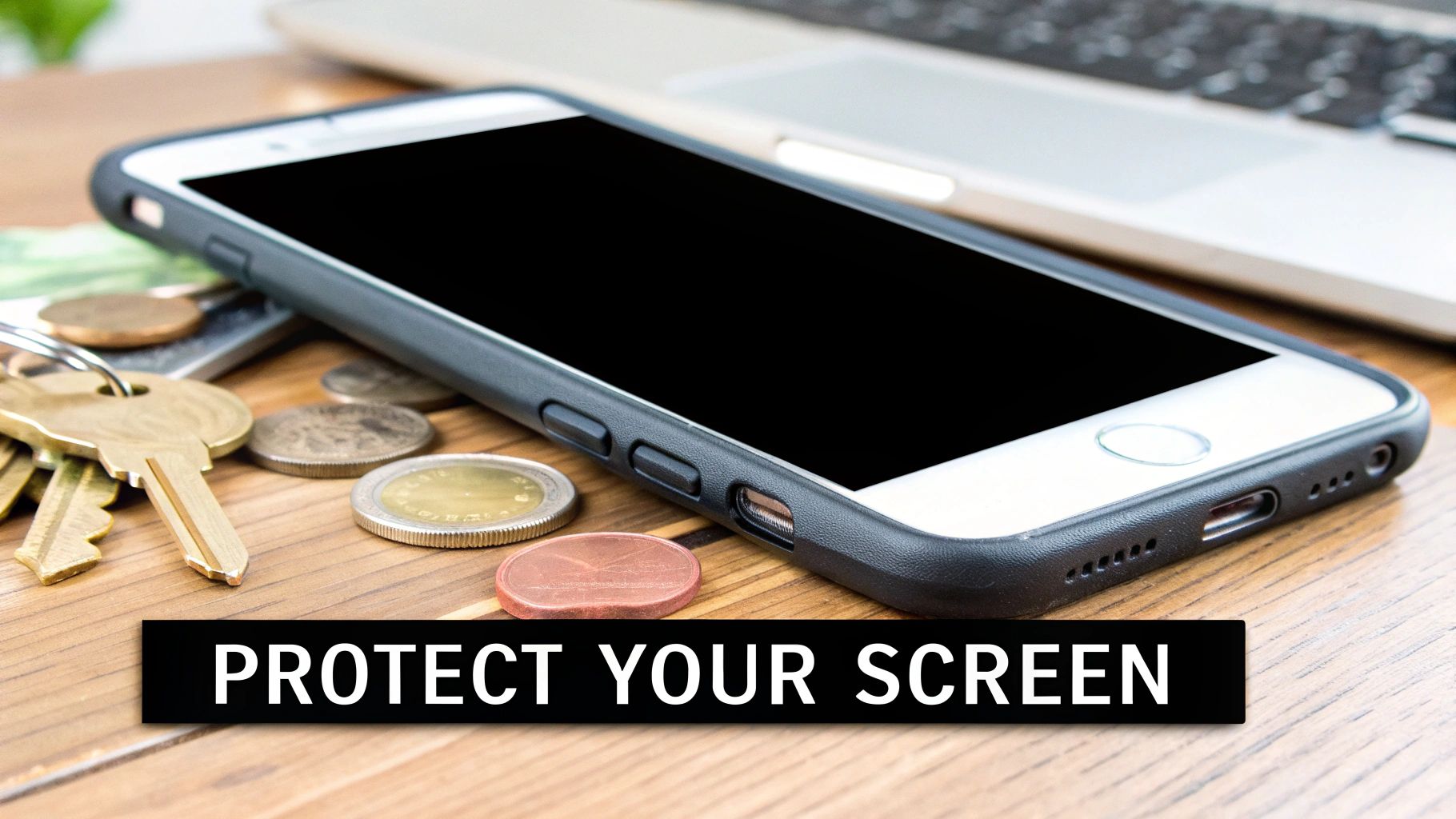
Alright, your phone screen is fixed and looking brand new. The last thing you want is a repeat performance. Thankfully, keeping it that way is less about luck and more about being a bit savvy. As they say, an ounce of prevention is worth a pound of cure—and it's a lot cheaper, too.
Think of your phone's defence in two layers: the gear you put on it and the habits you build around it. The most essential bits of gear are a top-notch screen protector and a solid case. These aren't just cosmetic add-ons; they're the front line against the everyday bumps and, of course, the dreaded drop.
Choosing the Right Armour for Your Device
Not all cases and screen protectors are created equal. Let's start with the screen. You're generally looking at two main choices: tempered glass or a protective film. Tempered glass is the heavy-hitter. It’s designed to be a sacrificial layer, shattering on a hard impact to absorb the shock that would otherwise obliterate your actual screen. It's the tougher, more robust option for drop protection.
Protective films, on the other hand, are the champions of scratch prevention. They're brilliant at fending off scrapes from keys and coins in your pocket. While they don’t offer the same impact resistance as glass, newer materials like hydrogel are a game-changer. Learning about the benefits of a hydrogel screen protector is well worth your time, as they can even "self-heal" minor scuffs.
When it comes to the case, look past the slick designs and focus on features that actually protect your phone:
- Raised Edges: A small lip around the screen and camera bump is crucial. It stops the glass from making direct contact when you lay the phone face down.
- Reinforced Corners: Most phones land on a corner when dropped. Extra cushioning here is non-negotiable for absorbing that initial shock.
- Shock-Absorbent Material: Forget flimsy, hard plastic. Look for materials like silicone, TPU, or multi-layered hybrids that are built to disperse the force of an impact.
Think of your phone case and screen protector as an insurance policy against gravity. A small investment now can save you from a much bigger repair bill down the track.
Building Better Phone Habits
Beyond the gear, a few simple tweaks to your daily habits can make a huge difference. Accidents don't just happen; they're often the result of predictable situations.
First, be mindful of where you keep your phone. The back pocket is a classic danger zone—it’s easy for the phone to fall out, get sat on (hello, pressure cracks!), or even bend. Similarly, try to avoid tossing your phone into a bag or pocket with keys, coins, and other sharp objects. That's how you get those deep scratches that weaken the glass over time.
Finally, just handle your phone with a bit more care. Don't slide it across tables, try not to use it with wet or slippery hands, and maybe consider a PopSocket or ring grip for extra security. These small, conscious actions are your best defence against another trip to the repair shop.
Common Questions About Screen Repair
Even after you've decided to go with a professional, a few questions are probably still bouncing around in your head. Getting your phone fixed can feel a bit like a black box, but it doesn't have to be. We've put together answers to the most common queries we hear from customers to help you feel confident and clued-in.
Think of this as your final checklist before you hand over your device and get that screen looking brand new again.
How Long Will My Screen Repair Take?
The thought of being without your phone for days is enough to make anyone anxious. The good news? For most common models from brands like Apple and Samsung, a skilled technician can get the job done surprisingly fast.
In a lot of cases, the whole process—from the initial check-up to the final post-repair tests—can be wrapped up in about an hour. This means same-day service is often the standard, letting you get on with your day with minimal hassle.
Does a Screen Replacement Affect Water Resistance?
This is a really important one. The short answer is: yes, it can. When your phone leaves the factory, it's sealed in a controlled environment to achieve that IP rating for water resistance. Any time the device is opened for a repair, that original factory seal is broken.
A reputable repair shop will always apply new adhesive seals when putting your phone back together to restore as much of that protection as possible. However, it's always best to assume your phone is no longer as water-resistant as it was out of the box. Be a little more careful around water from now on.
Honesty about this is a key sign of a trustworthy technician. They’ll set realistic expectations rather than making promises that can't be guaranteed.
What’s the Average Cost to Repair a Mobile Phone Screen?
There's no one-size-fits-all price, as the cost can swing quite a bit. The final bill really depends on your specific phone model and the kind of screen technology it uses.
Here’s a quick rundown of what drives the price:
- Screen Type: A high-end OLED screen from a new flagship phone will naturally cost more to replace than a standard LCD screen on an older or budget-friendly model.
- Model Popularity: Parts for really popular phones are usually easier to source and can sometimes be a bit cheaper than parts for less common devices.
- Extent of Damage: If the drop also damaged other parts like the front camera or the face ID sensors, that will add to the overall repair cost.
Your best bet is to always ask for a clear, upfront quote before giving the go-ahead.
Is It Worth Fixing the Screen on an Older Phone?
This is a classic cost-versus-value question. Before making a call, you need to weigh the repair price against what the phone is actually worth today and whether it still does everything you need it to.
If your older phone is still chugging along just fine—the battery isn't a total write-off and it runs all your crucial apps smoothly—then fixing the screen is almost always the more sensible financial decision. It’s also a much better choice for the environment than creating more e-waste. If the damage is too severe or you’re set on an upgrade, learning how to recycle mobile phones safely is the responsible thing to do.
At CTF Mobile Phones & Computer Repairs, we believe in clear answers and expert work. Get a transparent, no-obligation quote today and let our technicians bring your phone back to perfect condition. Visit us at https://www.ctf.com.au to learn more.